Wardogs, how the Season 2 rain changed the extraction shooter
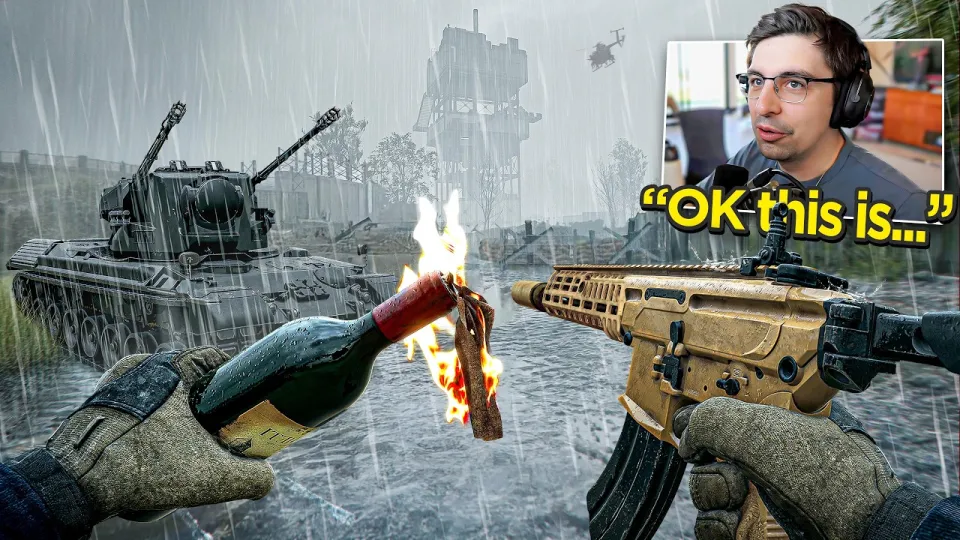
Video: Wardogs Is a Completely Different Game Now...
Want articles like this for your own video to promote it on YouTube and Google? Order them through the Telegram bot @sat_sit_bot. It writes articles around your video, embeds the video and publishes them on popular niche websites (no ads). Your first 50 articles are free.
· based on the channel shroud
Key takeaways
- Season 2 of Wardogs introduces heavy rain as a map-wide weather condition that reduces visibility.
- Rain makes long-range sniping unreliable; targets become hard to see even around 190 meters.
- Infrared goggles and close-range weapons gain value in wet weather, while torso and head shots with HP ammo waste damage.
- Squads of around 20 players working in one voice channel have a coordination edge over six-player groups.
- shroud's squad tested the new weather on stream on 2026-10-17, the day the video was published.
Wardogs is a tactical extraction shooter, and its Season 2 update has made it feel like a different game: heavy rain now sweeps the map, cutting visibility, punishing long-range sniping and forcing squads into closer, messier fights. The weather is not cosmetic — it changes how you move, what you carry and where fights happen. You can follow the full stream and bonus audio content from the broadcast on the shroud Spotify show page, where the channel's episodes are collected.
What the rain actually changes in Wardogs
The core effect of the new weather is reduced sightlines: rain, fog and spray blur targets at range, so the long-range duels that defined earlier versions of the map become unreliable. Players report that enemies can be hard to spot even around 190 meters, which is well inside the range where a scoped rifle used to feel comfortable. That single change ripples outward — snipers lose their safe angles, squads rotate differently, and fights that used to end at distance now drag into buildings and stairwells.
A few concrete shifts follow from that:
- Long guns lose value. If you cannot identify a target past roughly 190 m, a bolt-action or DMR is dead weight in open terrain.
- Close-quarters weapons rise. SMGs and compact rifles with high fire rates become the default because most engagements resolve inside 50 m.
- Thermal and infrared optics get stronger. Rain suppresses body heat signatures less than it suppresses eyesight, so infrared goggles are expected to become a premium item in wet raids.
- Sound matters more. With eyesight limited, footsteps, gunfire direction and callouts carry more of the information load.
The weather also reshapes the map itself. Squads holding a tower or a bridge suddenly find that the terrain around them looks unfamiliar — one group described pushing out of a southern tower complex near Ozeti and only then recognizing the bridge as a landmark they knew from clear weather. Rain turns familiar ground into new ground.
How shroud's squad adapted on stream
The footage from shroud's channel shows the practical side of the update: a six-player group trying to hold positions while the storm closes in. The recurring problem is that the rain removes the information players rely on. A teammate gets shot from inside a building, the squad knows roughly where the shooter is, and yet the fight still turns into a scramble because nobody can see the angle.
There is also a weapon-knowledge lesson baked into the session. One player keeps calling a gun the worst in the game while being told, repeatedly, that the weapon is loaded with HP (hollow-point) ammunition and needs leg shots to convert damage. HP rounds trade penetration for damage to unarmored limbs, so pumping them into a torso or helmet wastes the advantage. The same player keeps aiming center-mass, dies, and blames the gun — a reminder that in Wardogs the ammo type dictates the target zone.
Other moments show how thin the margins are in the rain. A player announces he is on 1 HP, then keeps peeking, then dies; another drops into a building mid-fight and opens his inventory to repack magazines instead of clearing the corner where the shooter is standing. Weather like this punishes exactly those habits, because you cannot rely on spotting the enemy first.
Why big squads suddenly look stronger
One of the most repeated observations around the update is about group size and coordination. A 20-player faction moving on one plan is not the same as 20 solo players: when everyone shares a voice channel, callouts, pushes and resupply happen in sync, and the group can simply overwhelm smaller teams. Against a six-player squad, that numerical and organizational gap is hard to close, rain or no rain.
That does not make big groups unbeatable. It means the counterplay shifts toward:
- Avoiding open approaches where a large group can bring multiple shooters to bear.
- Using the weather as cover — the same rain that hides enemies from you hides you from them.
- Breaking line-of-sight early and forcing the fight into tight interiors where numbers matter less.
- Punishing stragglers instead of fighting the main body.
The base-building side of the game also gets more interesting in this environment. A well-built position that looks almost impressive in clear weather becomes genuinely defensible when attackers cannot see the firing ports from a distance.
Recoil, aim and the skill gap in wet weather
Watching high-level play in Wardogs makes the mechanical gap obvious: recoil control at close range is the difference between winning and losing a rain-soaked corridor fight. Because engagements happen at shorter distances, spray patterns and tracking matter more than precision at range, and players who normally lean on scoped shots have to relearn their timing.
A few practical adjustments help:
- Practice close-range spray control with the SMGs you actually intend to carry.
- Rebind or re-learn magazine management so you are not repacking in the middle of a doorway.
- Carry medical items that let you reset quickly, since chip damage is constant in low visibility.
- Treat every corner as occupied when the storm is up — sound and patience beat reaction time.
Common questions and doubts from players
Most of the debate around the update centers on whether the rain is a net positive. The optimistic read is that it opens the game up to different playstyles: players who dislike long-range duels finally have a version of the map where positioning and patience pay off. The pessimistic read is that sniping has been gutted, and that a 190-meter visibility ceiling is too punishing for anyone who invested in scoped rifles.
A middle position is more useful. The rain is a rotating condition, not a permanent replacement for clear weather, and it rewards preparation: infrared optics, HP ammo used correctly, compact weapons and disciplined comms. The players who treat the storm as a modifier to build around — rather than a bug to complain about — get the most out of it.
Useful links from the stream
- shroud's Spotify show — episodes and bonus audio from the channel.
- Logitech G — peripherals, with the stream's promo code applied at checkout.
- Maingear — the prebuilt PC configuration referenced on stream.
- shroud on Twitter — schedule and updates.
- shroud on Twitch — live streams of Wardogs and other shooters.
Bottom line
Season 2's rain is the biggest single change to how Wardogs plays: it collapses sightlines, demotes snipers, promotes infrared optics and close-range weapons, and turns coordination into the dominant advantage. The session published on 2026-10-17 by the shroud channel captures the adjustment period well — squads fumbling angles they used to know, weapons misused because the ammo type was ignored, and fights decided by who adapted first. If you want more of that breakdown in audio form, the shroud Spotify show is the place to continue.
Questions & answers
Is Wardogs really a different game after the Season 2 update?
Not a different game in genre, but the rain condition changes enough systems that it plays differently. Visibility drops sharply, long-range fights become unreliable, and close-quarters weapons and thermal optics take over. Players who built their loadouts around sniping have to rebuild them.
Does the rain make sniping useless in Wardogs?
It makes sniping unreliable rather than impossible. Targets become hard to identify even around 190 meters, which is inside the range where scoped rifles used to feel comfortable. Snipers can still work from elevated positions over shorter lanes, but they can no longer dominate open ground.
Why do players say a gun is bad when it has HP ammo?
HP ammunition trades penetration for damage to unarmored limbs, so it must be aimed at legs to be effective. Firing it into a torso or helmet wastes the damage bonus, and the weapon then feels weak. The gun is not the problem — the target zone is.
Do larger squads have an advantage in the rain?
Yes, mainly through coordination. A group of around 20 players sharing one voice channel can synchronize pushes and callouts, which overwhelms smaller teams that cannot see as much. The counter is to avoid open approaches and force fights into tight interiors where numbers matter less.
Source: Wardogs Is a Completely Different Game Now... · Markdown version