Valorant Champions Shanghai playoffs deliver a PRX vs LOUD elimination thriller that reshapes the title race
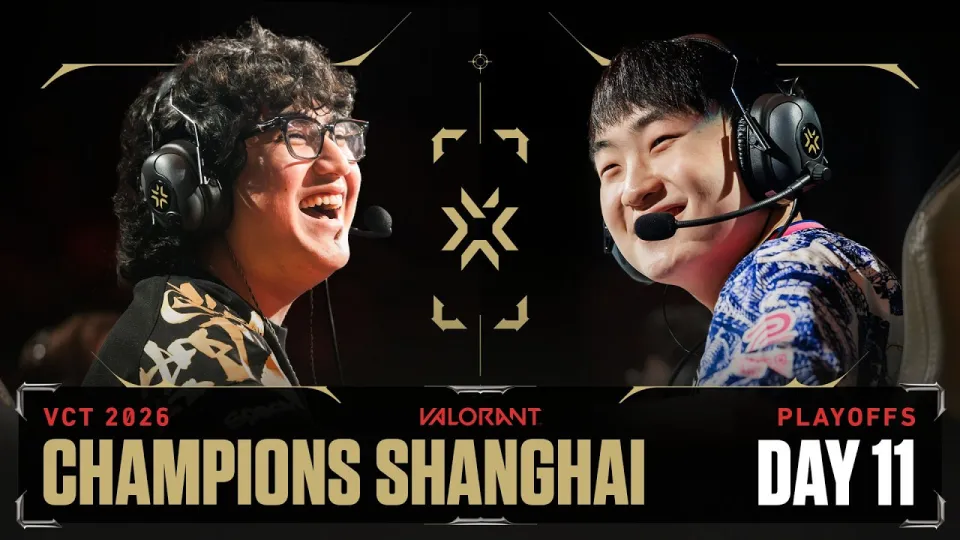
Video: PRX vs. LOUD — VALORANT Champions Shanghai — Playoffs Stage — Day 11
Want articles like this for your own video to promote it on YouTube and Google? Order them through the Telegram bot @sat_sit_bot. It writes articles around your video, embeds the video and publishes them on popular niche websites (no ads). Your first 50 articles are free.
· based on the channel VALORANT Champions Tour
Key takeaways
- Valorant Champions Shanghai runs September 24 to October 18 with 16 teams from Americas, CN, EMEA and Pacific.
- The Day 11 playoff match between PRX and LOUD is the focal point of the upper bracket race.
- PRX's playoff reputation as a team that builds big leads and lets them slip is the dominant talking point around the match.
- LOUD's trade-heavy, fearless style is repeatedly cited as the structural edge in the series.
- Teams like 100T and NRG are named as the biggest threats left in the Americas side of the bracket.
Valorant Champions Shanghai is the final stop of the 2026 VCT season, and the playoff meeting between PRX and LOUD on Day 11 is the match that frames the whole bracket. Sixteen teams from Americas, CN, EMEA and Pacific entered the event, which runs from September 24 to October 18, and only one leaves as the 2026 VALORANT World Champion. For schedule updates, bracket information and official announcements, follow the VALORANT Esports account on X.
What the PRX vs LOUD playoff series actually decided
The series mattered because it separated two very different playoff identities in the same region. PRX arrived with the reputation of a team that can beat anyone in the group stage and then stall in elimination matches, while LOUD arrived as the roster that keeps trades tight and refuses to lose structured rounds. In a sixteen-team Champions bracket, a single upper-bracket loss reshuffles the path to the grand final, so the result carried more weight than a normal playoff win.
The match itself followed the pattern viewers expected. PRX generated early advantages and looked capable of closing maps, but LOUD's response was consistently built on traded kills and disciplined retakes rather than individual hero plays. That difference — five players committing together versus isolated duels — is the single most repeated explanation for how the series swung.
Why PRX keep losing leads in playoff Valorant
PRX's playoff problem is not aim or map pool; it is round discipline under pressure. The recurring criticism is specific and technical, and it shows up in three places:
- Unnecessary 1v1 duels. PRX players take isolated fights that offer no trade value, turning a 5v4 into a 4v4 for free.
- Over-reliance on W-gaming. The team defaults to pressing forward with utility and bodies instead of resetting, saving and re-anchoring on fundamentals.
- Lead management. Large advantages, including a 9-3 half, have slipped because the team keeps forcing winnable-but-risky situations instead of bleeding the clock.
The comparison that keeps coming up is with rosters like NRG and 100T, whose discipline converts advantages into closed maps. PRX create more winnable positions than almost any team in the event; the gap is in finishing them.
How LOUD's trade structure beats star-driven Valorant
LOUD win rounds by making every duel a two-player problem. Their default is to enter together, trade immediately and force the opponent into a chain of even fights, which neutralizes teams that rely on individual timings. Against PRX, that meant every aggressive peek was answered rather than punished late.
The style is not passive. LOUD's fearless entries come from the confidence that a second player is always close enough to convert the trade, so the first contact becomes a setup rather than a gamble. On attack, that produces clean post-plant setups; on defense, it produces retakes where the site is recovered in sequence instead of all at once. It is the kind of structure that scales across a long Champions run, where map pools and preparation depth matter as much as raw firepower.
The Americas bracket is now the story of Champions Shanghai
With PRX out of the clean path, the Americas contingent looks like the deepest block in Shanghai. Three names dominate the conversation: LOUD, 100T and NRG. All three combine structured mid-round calling with playoff experience, and all three have shown they can win series without needing a single player to overperform.
That creates an awkward pick'em problem for fans. A LOUD vs 100T grand final is the most common prediction, with LOUD favored to take it, but NRG sit in the same tier. The realistic read is that the region's internal matchups are closer than any single result suggests, and the team that manages its map veto best will separate from the pack. For CN, EMEA and Pacific sides, that means the path to the trophy likely runs through multiple Americas opponents.
What fans are arguing about after Day 11
Three debates dominate the discussion around the series, and each has a concrete answer.
- Is PRX a choke team or a structurally flawed one? The second. Losing leads repeatedly points to decision-making defaults, not nerves, which is why the fix is coaching and protocol rather than motivation.
- Did PRX throw both maps? They held large leads and lost them, but the losses came from repeated risk-taking that LOUD's trade structure punished. That is a tactical collapse, not a random one.
- Is the Americas dominance real? The depth is real; the certainty is not. LOUD, 100T and NRG are all credible champions, which is exactly why the bracket stays open.
What to watch in the remaining Champions Shanghai matches
Watch the mid-round economy. Teams that save cleanly and force on the right rounds tend to survive the long format, and that is where LOUD have looked sharpest. Second, watch PRX's response if they get another elimination series: whether they slow down their entries or repeat the same pattern is the clearest signal of whether the criticism has been absorbed. Third, watch the veto. In a bracket this tight, the team that bans its weakest map early gains more than the team that wins one extra aim duel.
Useful links
- Official VALORANT Esports updates on X: https://x.com/valorantesports
- Facebook: https://www.facebook.com/ValorantEsports/
- Instagram: https://www.instagram.com/valorantesports/
- TikTok: https://www.tiktok.com/@valorantesports
- Twitch: https://www.twitch.tv/valorant
The takeaway from PRX vs LOUD
PRX vs LOUD at Valorant Champions Shanghai is a clean case study in why structured trading beats star-driven aggression across a long bracket. LOUD's discipline converted PRX's early leads into losses, while PRX's tendency to force unnecessary duels kept handing back the rounds they had already won. The Americas region now owns the most credible paths to the trophy, with LOUD, 100T and NRG all capable of closing out a grand final. The full Day 11 broadcast and the rest of the playoff stage are available on the VALORANT Champions Tour channel, which produced this breakdown, and the official VALORANT Esports X account is the fastest place to catch the next bracket update before the grand final.
Questions & answers
Did PRX lose to LOUD because of nerves or because of how they play?
The pattern points to how they play rather than nerves. PRX repeatedly build leads and then take unnecessary 1v1 duels and force forward pressure instead of resetting, which lets a trade-heavy team like LOUD climb back into maps. That is a decision-making issue that coaching and round protocols can fix.
Why is LOUD's trade style so effective in the Champions playoffs?
LOUD make every duel a two-player problem, so an aggressive peek gets answered immediately instead of punished later. That structure produces clean post-plant setups on attack and sequenced retakes on defense, which holds up better across a long bracket than relying on individual timings.
Which teams are the biggest threats to win Valorant Champions Shanghai?
LOUD, 100T and NRG are the most cited contenders because all three combine structured calling with playoff experience and do not need one player to overperform. A LOUD vs 100T final is the most common prediction, but the gap between those three is small enough that map veto could decide it.
Can PRX still win the event after this playoff loss?
It depends on the bracket path and on whether they adjust their mid-round defaults. PRX have shown they can create more winnable positions than almost any team in the event, so the ceiling is high; the question is whether they stop forcing risky fights with leads in hand.
Source: PRX vs. LOUD — VALORANT Champions Shanghai — Playoffs Stage — Day 11 · Markdown version